Overview
Saharan dust may contain various particles which can produce symptoms such as:
- A dry cough
- Sore throat
- Itchy, watery eyes
- Sneezing
- Runny nose
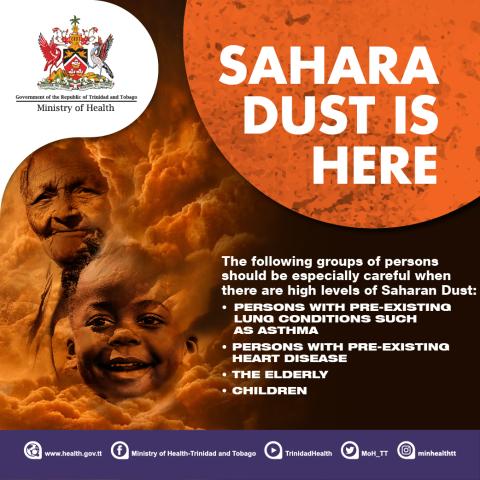
High levels of Saharan dust may exacerbate illness in persons at high risk of respiratory complications including:
- Persons with pre-existing lung conditions such as asthma disease.
- Persons with pre-existing heart disease.
- The elderly.
- Children.
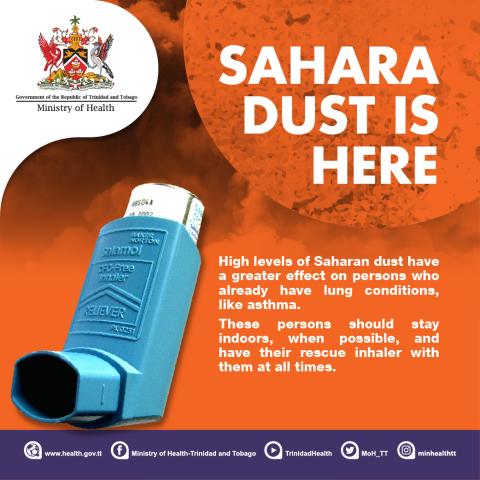
Those with pre-existing conditions should stay indoors, when possible, and should have their rescue inhaler with them at all times.
Consider wearing a face mask to protect yourself from dust particles.
While persons may experience symptoms during the days of a Sahara dust event, these symptoms should disappear as the dust levels reduce.
Affected persons should seek medical attention if they experience severe shortness of breath (difficulty breathing), persistent fever (for more than 2-3 days) or a severe worsening of a pre-existing condition.
Learn More