Career

CAREER
OPPORTUNITIES
NO OPPORTUNITY PRESENTLY.
CAREER
OPPORTUNITIES
NO OPPORTUNITY PRESENTLY.
MEDIA
RELEASES
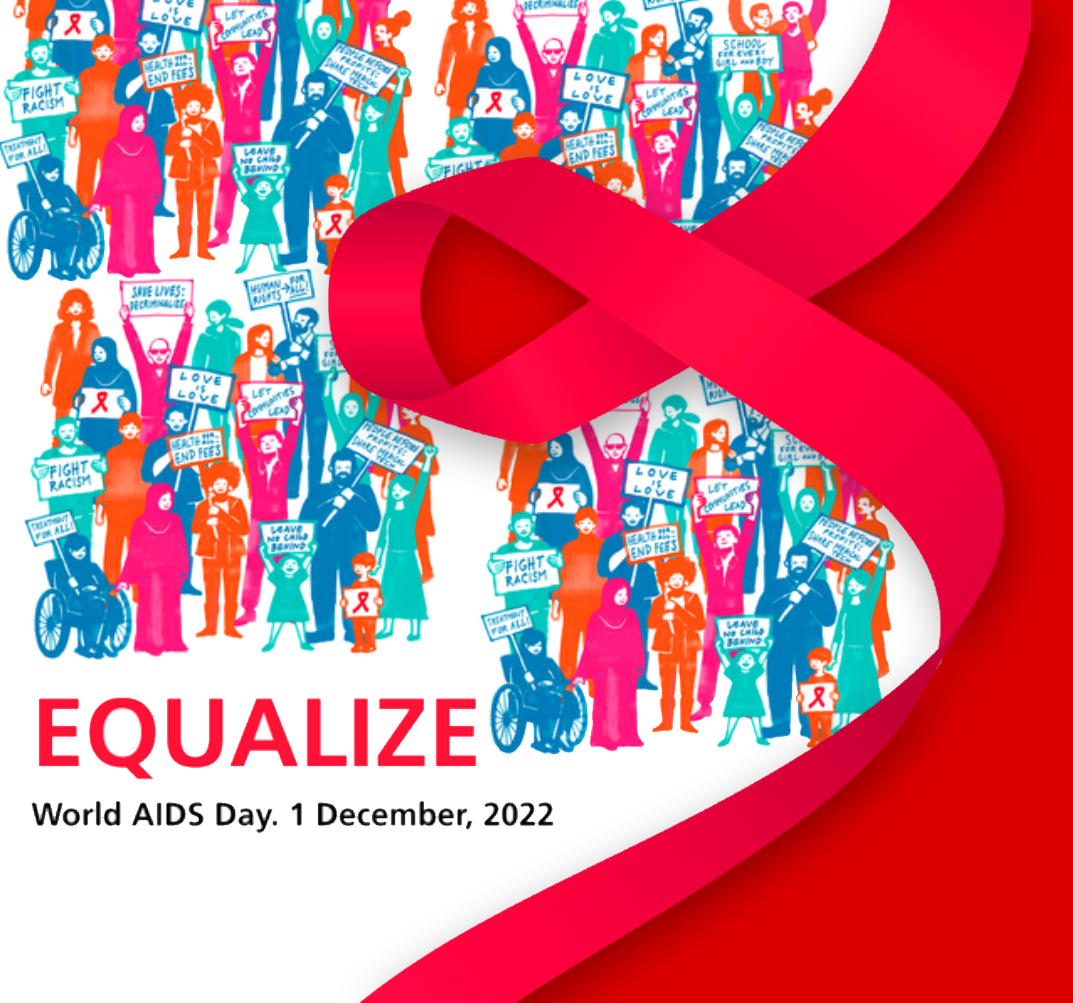
World AIDS Day 2022 -
December 1st
Unite to end the inequalities holding back the end of AIDS.


Since 1988, the world has celebrated World AIDS Day in remembrance of all those who have died of AIDS-related illnesses and those living positively and bravely with HIV. World AIDS Day remains as relevant today as it’s always been, reminding people and governments that HIV has not gone away. There is still a critical need for increased funding for the AIDS response, to increase awareness of the impact of HIV on people’s lives, to end stigma and discrimination and to improve the quality of life of people living with HIV. The human cost of inaction on AIDS is an injustice by governments and people alike, if action is not taken to end AIDS.

CONTACT US
INFORMATION
We will make every effort to respond to your inquiry in a timely manner. While we appreciate your questions, we are unable to respond to all inquiries. If you prefer to discuss these questions together on the phone or via email, we can do that.
National AIDS Coordinating Committee (NACC)
4-6 Queen's Park East
Port-of-Spain 101002
Trinidad and Tobago
Tel: 868-217-4664 Ext. 12903
Email: naccsecretariat@health.gov.tt

NATIONAL HIV
HELPLINE
Rapid shifts in the HIV epidemic and the development of new programmatic strategies including HIV testing (and self-testing) has prompted the National AIDS Coordinating Committee (NACC) and the HIV and AIDS Coordinating Unit (HACU) under the Ministry of Health (MoH), to relaunch The National HIV Helpline on 1st December 2021.
Helpline Goal - To Mitigate the Effect of HIV on the Population of Trinidad and Tobago.
The Helpline Would Benefit the Public with information on HIV& AIDS, prevention methods, HIV education, linkage to resources, psychological and emotional support to PLHIV, families, and communities to stop the spread of HIV, stigma, and discrimination of PLHIV as well as provided support for HIV self-testing and linkage to care.

PARTNERS &
SUPPORT AGENCIES
The NACC, its Secretariat and its respective implementing stakeholders are guided by the National Strategic plan to ensure that all activities within the HIV and AIDS response are effectively coordinated in accordance with national goals. The entire HIV response uses this plan to coordinate the implementation of activity in Trinidad and Tobago. These groups reflect the following:
Persons living with HIV and AIDS
Vulnerable/key populations
Academia
Community based organisations
Faith based organizations
Civil Society Government ministries
Regional and International Technical agencies
| Organization | Website | Phone | Address | |
|---|---|---|---|---|
| 4Less Initiative | https://www.facebook.com/4lessInitiative/ | (868) 386-9120 or (868) 220-5986 | 4lesstandt@gmail.com | #16 Lynch Plaza, Abercromby street, St Joseph |
| A Sexual Culture of Justice (formerly known as CAISO) | https://portal.caribbeansexualities.org/ | (868) 322-7373 | caisott@gmail.com | #47 Norfolk Street, Belmont |
| Anglicans Advocating Action in HIV | (868) 682-5178, or (868) 493-8646 | info@theanglicanchurchtt.com or geosealy@hotmail.com | Holy Saviour Anglican church, Corner Francis and Sellier Street, St. Augustine | |
| Caribbean Association for Feminist Research and Action (CAFRA) | (868) 684-1711 | CAFRA T&T, #3 Sellier Street, St. Augustine | ||
| Caribbean Conference of Churches | http://www.ccc-caribe.org/eng/ | (868) 662-3064 or (868) 662-2979 | trinidad-headoffice@ccc-caribe.org | |
| Caribbean Umbrella Body for Restorative Behaviour (CURB) | (868) 316-0753 | info@curbtrafficking.org | PO Box 4945, Tunapuna | |
| Celebrating Life | (868) 656-9314 or (868) 732-6668 | celebratinglifetnt@gmail.com | #55 Poonah Road, Whiteland, Williamsville, Gasparillo | |
| Child Line | http://childlinett.org/ | 800-4321 or (868) 626-3635 | childline@gmail.com | |
| Children’s Authority of Trinidad and Tobago | https://ttchildren.org/ | 627-0748, 623-7555, 625-7151 | info@ttchildren.org | Corner Dere St. and Queen’s Park West, Port of Spain |
| Coalition Against Domestic Violence | http://coalitionagainstdomesticviolence.org/ | (868) 624-0402 or (868) 627-8894 | cadvtt@gmail.com or cadvassistant@gmail.com | #1 Robinsonville, Belmont, Port of Spain |
| ComTALK International | (868) 743-9977 or (868) 795-7932 | comtalkint@gmail.com | #35 Mango Avenue, Santa Rosa Heights, Arima | |
| CVC Coalition | https://cvccoalition.org/ | +1 (876) 631-7299 | info@cvccoalition.org | 1D-1E Braemar Avenue Kingston 10 Jamaica |
| Cyril Ross Nursery | (868) 709-8471 | cyrilrosshome1@gmail.com | #7 El Dorado Road, Tunapuna | |
| Faith Based Network of Trinidad and Tobago (FBNTT) | (868) 732-6668 | winspringprayer@hotmail.com | Evangel Temple #113 Tenth Street, Barataria | |
| Family Life Tobago | https://www.facebook.com/familylifetbg | (868) 635-0839 | 151 Calder Hall Road, Scarborough, Tobago | |
| Family Planning Association of T&T (FPATT) | http://www.ttfpa.org/ | (868) 623-5169 or (868) 623-0004 | mail.fpatt@gmail.com | 79 Oxford Street, Port of Spain |
| FPATT Adolescent Centre (Youth Clinic) | (868) 627-3444 | 141-144 Henry Street, Port-of-Spain, Trinidad | ||
| FPATT San Fernando (South Clinic) | (868) 652-3065 or (868) 653-6514 | 6A Lord Street, San Fernando | ||
| FPATT Scarborough (Tobago Clinic) | By Appointments only. | 61 Bacolet Street, Scarborough, Tobago | ||
| Friends for Life | (868) 336-0051 or (868) 379-1952 or (868) 386-5312 | friends4life.tt@live.com | ||
| Grass Roots Organizations Operating Together In Sisterhood in Trinidad and Tobago (GROOTS) | (868) 230-2307 or (868) 220-5986 or (868) 289-3431 | grootstt2@gmail.com | 29 Auzonville Road, Tunapuna | |
| HEU, Centre for Health Economics | https://sta.uwi.edu/fss/heu/hivaids-0 | |||
| Imani Bet Knesset Foundation & Living Positively Support Group | https://www.facebook.com/ImaniConsultingAndFoundationTobago | (868) 494-8827 or (868) 761-4727 | imani.foundation.tobago@gmail.com | 75 Windward Main Road, Belle Garden, Tobago |
| Institute for Gender and Development Studies St. Augustine Unit The UWI | https://sta.uwi.edu/igds/ | (868) 662-2002 ext. 83577 / 83572 / 82533 | igds@sta.uwi.edu | Institute for Gender and Development Studies St. Augustine Unit The UWI |
| Jabulous | http://www.jabulous.org/ | (868) 773-6890 or (868) 330-3552 | salorne@jabulous.org or salorne.mcd@gmail.com | Building 4 Harpe Place, Observatory Street, Port of Spain |
| Joint Trade Union Movement (JTUM) | https://www.labour.gov.tt/about-us/key-relationships/workers/joint-trade-union-… | |||
| Living Water Community | http://www.lwctt.org/ | (868) 625-6730 or (868) 623-4677 or (868) 625-5168 | mail@lwctt.org or caplwctt@gmail.com | 109 Frederick Street, Port of Spain |
| Medical Research Foundation (MRF) | https://www.facebook.com/MedicalResearchFoundationofTrinidadandTobago | (868) 623-5834 or (868) 625-8512 or (868) 627-9923 | 7 Queens Park E, Port-of-Spain | |
| Millennium Sistahs Trinidad and Tobago (MISISTAHS) | https://www.facebook.com/millennium.trinidadtobago | (868) 678-7549 or (868) 663-5280 | misistahstandt@yahoo.com | 28 St Cecelia Street, Tunapuna |
| Ministry of Attorney General, Coordinator HIV and AIDS | https://agla.gov.tt/hiv-coordinating-unit/ | (868) 223-2452 | communication@ag.gov.tt | AGLA Tower, Corner of London and Richmond Streets, Port of Spain, Port of Spain, Trinidad and Tobago. |
| Ministry of Education, Student Support Division | https://www.moe.gov.tt/student-support-services-division-sssd/ | Tel: 1(868)622-2181 (Ext. 1033/1034/1035/1036) | studentsupportservices@moe.gov.tt | Student Support Services Division (SSSD) Ministry of Education Level 1, Building A, Education Towers No. 5 St. Vincent Street, Port of Spain |
| Ministry of Finance, Budget Division | https://www.finance.gov.tt/divisions/budget-division/ | Telephone: (868) 612-9700 exts. 4018 / 4044-4046 | Budget Division Level 9&10, Finance Building Eric Williams Financial Complex Independence Square Port of Spain |
|
| Ministry of Health , HIV and AIDS Coordinating Unit | https://health.gov.tt/services/hiv-aids-coordinating-unit | Telephone: (868)-285-9126 or 627-2004. HIV Helpline: 800-4HIV (4448) | Level 4, Sacred Heart Building, Sackville Street, Port of Spain | |
| Ministry of Labour HIV Workplace Advocacy Unit | https://www.labour.gov.tt/empowerment/hiv-workplace-advocacy-unit | (868) 625-8478 | labour-communications@gov.tt | 1A Wrightson Road, Tower C Level 5-6, Port of Spain, Trinidad and Tobago |
| Ministry of National Security, Prisons Division | https://nationalsecurity.gov.tt/contact-us/ | Telephone: 623-2441-5 | corpcomm@mns.gov.tt | Temple Court 1, 31-33 Abercromby Street, Port of Spain. |
| Ministry of Planning and Development, Technical Cooperation Unit or Policy Unit | https://www.planning.gov.tt/content/divisions | Tel: (868) 612-3000 | Ministry of Planning and Development Level 14, Eric Williams Financial Complex Independence Square Port-of-Spain, Trinidad |
|
| Ministry of Social Development and Family Services, HIV and AIDS Coordinating Unit | https://social.gov.tt/hiv-aids-co-ordinating-unit/ | Telephone: 623-2608, Toll Free – 800-1673 | info@social.gov.tt, info@social.gov.tt | Head Office CL Financial Building, 39-43 St Vincent Street, Port-of-SpainHead Office CL Financial Building, 39-43 St Vincent Street, Port-of-SpainHead Office CL Financial Building, 39-43 St Vincent Street, Port-of-Spain |
| Ministry of Sport and Community Development | https://mscd.gov.tt/ | (868) 625-6088 ext 5187 | Level 8, Nicholas Tower, 63-64 Independence Square, Port of Spain | |
| Ministry of Tourism, Culture and the Arts | https://mtca.gov.tt/ | (868) 624-1403 or (868) 226-8687 | media@tourism.gov.tt | Levels 8-10, Tower C International Waterfront Complex 1 A Wrightson Road, Port of Spain |
| Ministry of Youth Development and National Service | https://www.mydns.gov.tt/contact-us/ | (868) 628-6792 | info.mydns@gov.tt | #2 Elizabeth Street, St. Clair, Port-of-Spain, Trinidad and Tobago |
| National Trade Union Centre of Trinidad and Tobago (NATUC) | https://www.labour.gov.tt/about-us/key-relationships/workers/national-trade-uni… | |||
| Pan American Health Organization | https://www.paho.org/en | 1 202-974-3000 | socialnetworks@paho.org | 525 23rd St NW, Washington D.C., DC, United States, Washington, District of Columbia |
| Patient Advocate Mission Trinidad and Tobago (PAMTT) | http://www.pamtt.org/ | (868) 333- 4726 (4PAM) | info@pamtt.org | 50 Old Southern Main Road, Montrose Junction, Chaguanas |
| Population Services International (PSI Caribbean) | http://www.psi.org/Caribbean/ | (868) 623-2497 or (868) 627-1783 | info@psicaribbean.org | #1 De Verteuil Street, Woodbrook, Port-of-Spain |
| Rape Crisis Society of Trinidad and Tobago | https://www.facebook.com/RapeCrisisSocietyTT | (868) 627-7273 or (868) 624-0402 | rapecrisistnt@yahoo.com | #1 Robinsonville, Belmont, Port of Spain |
| Rebirth House | (868) 623-0952, or (868) 627-8894 | rebirthhouse@yahoo.com | 5 Charford Court, Charlotte Street, Port of Spain | |
| Red Cross Society of Trinidad and Tobago | https://ttrcs.org/ | admin@ttrcs.org | ||
| Red Cross Society of Trinidad and Tobago (Nortthern Branch) | (868) 627-8215 or (868) 627-8128 | #7 Fitzblackman Drive, Wrightson Road Extension, POS | ||
| Red Cross Society of Trinidad and Tobago (Southern Branch) | #2 Ruth Avenue, San Fernando | |||
| Red Cross Society of Trinidad and Tobago (Tobago Branch) | (868) 639-2781 | Signal Hill Connector Road, Signal Hill, Tobago | ||
| Red Initiatives | http://www.redinitiativestnt.org/ | (868) 664-1863 or (868) 687-6536 | 38 A Cocorite Street, Arima | |
| Rescue Mission | (868) 674-0567 | rescuemission1986@gmail.com | #113 Tenth Street, Barataria | |
| Save Our Society Foundation | (868) 223-1994 | saveoursocietytt@gmail.com | Suite 9 B3, Flagstaff Hill, Long Circular Road, St James | |
| Serenity House | (868) 785-1583 or (868) 710-9953 | sumatee.s.barran@gmail.com | ||
| Soroptimist International of Port of Spain (SIPOS) | https://sigbi.org/anaparima/ | (868) 779-4930 | soroptismistportofspain@yahoo.com | #15 Nepaul Street, St. James |
| Soroptomist | https://sigbi.org/ | (868) 764-5366 | sisf.tt@gmail.com | |
| South AIDS Support | (868) 652-2437 | info@southaids.org or southaidschair@gmail.com | #25 Victoria West, Paradise Pasture, San Fernando | |
| The Caribbean Med Labs Foundation | https://www.cmedlabsfoundation.com/ | +1-868-628-5911 / 4765 | info@cmedlabsfoundation.net | 63A Petra St., Woodbrook, Trinidad and Tobago |
| The Pan Caribbean Partnership | https://pancap.org/ | +592 222 0001 Ext 3442 | pancap@caricom.org | PANCAP Coordinating Unit (PCU) CARICOM Secretariat 13-15 Area F Plantation, Turkeyen, Greater Georgetown, Guyana |
| The Trinidad and Tobago Red Cross Society (TTRCS) | https://ttrcs.org/ | (868) 627-8215(868) 627-8215 | admin@ttrcs.org | 7A Fitzblackman drive, Wrightson road ext., Port of Spain, Trinidad |
| The U.S. President's Emergency Plan for AIDS Relief (PEPFAR) | https://www.state.gov/pepfar/ | sgacpublicaffairs@gmail.com | Washington D.C., DC, United States, Washington, District of Columbia | |
| The Voice of One Overcomer’s Club | http://www.thevoiceofonett.org/ | (868) 679-6747 | von_oc@yahoo.com | #56 Railway Road, Dow Village, California |
| Tobago AIDS Society | (868) 682-2370 or (868) 635-1024 or (868) 639-6771 | tobagoaids@msn.com | Room 14 Fairfield Complex, Bacolet Street, Scarborough, Tobago | |
| Tobago House of Assembly (THA) | https://www.tha.gov.tt/ | (868) 639-3421 | information@tha.gov.tt | Administrative Complex, Calder Hall, Tobago |
| Tobago Youth Ambassadors | (868) 747-4002 or (868) 360-8720 | tobagoyouthambassadors@gmail.com | Signal Hill Youth Development Centre, Signal Hill | |
| Tobago Youth Council | https://www.facebook.com/TYCTobago | (868) 732-7630 | youthcounciltobago@gmail.com | 16 Fairfield Complex, Bacolet Street, Scarborough, Tobago |
| Trinidad and Tobago Community of Positive Women | https://www.facebook.com/TTCWPositive | (868) 275-5882 or (868) 730-4925 or (868)736-5996 | icwtt2018@gmail.com | #6 Pembroke Street, Port of Spain |
| Trinidad and Tobago Transgender Coalition | https://www.facebook.com/tttranscoalition | (868) 315-5509 or (868) 391-5362 | tttranscoalition@gmail.com | #14 Corner Phillip & Mc Donald Street, Curepe |
| Trinidad and Tobago Youth Ambassadors | (868) 372-6912 or (868) 463-3350 | youthambassadorstt@gmail.com | Arouca Community Centre, #2 Victoria Street, Arouca | |
| Trinidad Youth Council | https://trinidadyouthcouncil.org/ | (868) 301-5018 | trinidadyouthcouncil@yahoo.com | Malick Youth Centre, 7th Ave, Barataria |
| UNAIDS Caribbean | https://unaids-caribbean.org/ | (876) 960-6536 | caribbean@unaids.org | 60 Knutsford Boulevard Kingston 5, Jamaica |
| UNFPA Caribbean | https://caribbean.unfpa.org/en/ | (868)-623-7056 Extensions: 238, 287, 294 Fax: (868)-623-1658 | trinidad.office@unfpa.org | UN House, 3A Chancery Lane City:Port of Spain State: Trinidad and Tobago |
| Young Men’s Christian Association | http://www.ymcatt.org/ | (868) 625-9622 | ymcatnt@gmail.com | Benbow Road, Wrightson Road, Port of Spain |
| Young Women’s Christian Association | http://www.ywcatt.org/ | (868) 627-6388 | nywcatt@yahoo.com | 8A Cipriani Boulevard, Port of Spain |

COMFORT
CARE
We live in a beautiful time when PLHIV can live healthy lives as long as they adhere to their medication and treatment plans. However, we do know that there are other conditions that can affect you. Sadly, some of these conditions may require that you access comfort care.
Comfort care is a way to look after patients with life threatening diseases. It is also known as hospice care, end of life care, and supportive care. Comfort care includes care for patients within the last days to months of their lives.
Persons may need comfort care if they have a terminal illness. For example, persons with terminal cancer or end-stage renal, cardiovascular and respiratory diseases would benefit from this type of care.
Care happens wherever it is needed. These places include:
The goals of comfort care include:
Comfort care should include the following:
All persons have the right to determine how they wish to engage both life and death. HIV is not a death sentence. This section though, is designed to support PLHIV who may experience other conditions that may require this type of care.
PREVIOUS TOPIC:
HIV and Andropause
NEXT TOPIC:
U and Your Baby HIV and Pregnancy

HIV AND
ANDROPAUSE
Andropause is the male equivalent of female menopause. It is generally characterized by a decline in sexuality and energy, due to the decreasing levels of male hormones such testosterone.
Andropause is a complex condition. It occurs with a decline in testosterone but this alone may not be the cause. Actually, after the age of 30, a male’s testosterone levels decline by 1% each year. Andropause is more common in those with obesity, high blood pressure, heart disease and type 2 diabetes.
Symptoms of Andropause include:
Risk Factors for Andropause include:
Some of the symptoms listed above can lead to poor decision making, which can in turn lead to poor sexual choices and risky behaviour. Men with HIV are more prone to Andropause due to hypogonadism. Hypogonadism occurs when the sex glands called ‘gonads’ produce little sex hormones.This can be caused by HIV.
How is Andropause/Male Menopause treated? - The treatment of this ailment includes Testosterone Replacement Therapy. Some experts believe that a holistic approach is the key to the management of Andropause. This therapy, however, is not a benign approach, and must be carried out according to the advice of your doctor.
To manage andropause, make lifestyle changes!
If you would like to understand more about the relationship between HIV and andropause, please take a look at the following video. If you would like to learn more about andropause, please take a look at the following video:
PREVIOUS TOPIC:
HIV and Menopause
NEXT TOPIC:
Comfort Care

HIV AND
MENOPAUSE
Menopause refers to twelve (12) consecutive months without experiencing a period, and usually occurs in women between the ages of 45 and 55.
Menopause is caused by the changes in two major hormones:
Oestrogen;
Progesterone.
The transition into menopause is known as perimenopause. Perimenopause is commonly known to entail symptoms such as hot flashes and mood disturbances. Some other symptoms include:
Women living with HIV are more likely to experience perimenopause symptoms than women who do not have HIV. Those living with HIV may even experience earlier onset of menopause. Some research has also indicated that lower CD4 counts will be found in women with menopause.
If you are experiencing perimenopause, here are a few methods you should use to take care of yourself:
Please also take a look at the videos below. The first one explains menopause (Alila Medical Media, 2019) while the second examines the relationships between HIV and menopause.
PREVIOUS TOPIC:
Overview - U In The Future
NEXT TOPIC:
HIV and Andropause

U IN THE FUTURE
HIV & AGING
For many persons living with HIV, its long term effect may not be something that you have thought about. This section invites you to explore some considerations such as the relationship between HIV and menopause, as well as considerations about your medication (also called Pill Burden).
HIV can make the normal effects of aging appear earlier, and it can make some age-related conditions more noticeable or intense. (This is known as accelerated and accentuated aging.) Taking HIV medications, medications for other chronic conditions, and maintaining an undetectable viral load will lessen the HIV-related effects of aging.
OVERVIEW
Please remember that as you age, it is important to stick to your treatment plan.
Please choose from one of the following topics of interest:

PREVIOUS TOPIC:
Other STIs
NEXT TOPIC:
HIV and Menopause