What Is A Treatment Site?
When you are diagnosed as HIV+, one of your first questions may be: “Where can I find support and treatment?” The Ministry of Health of Trinidad and Tobago, via units such as the HIV/AIDS Co-ordinating Unit (HACU), will ensure that you will have adequate treatment support. This support is provided via treatment sites that work along with HACU, supported by the Ministry of Health.
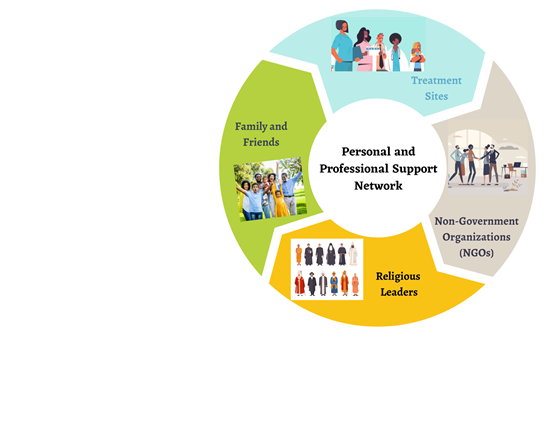
As you start and stay engaged in HIV treatment and care, you will be supported by a team of people at these treatment sites throughout Trinidad and Tobago.
What Happens At A Treatment Site?
A treatment site is a facility with an established team of healthcare workers who provide prevention, treatment, care and support services to people living with HIV (PLHIV). These services include HIV testing and counseling, clinical management and patient monitoring, as well as other services.
You may be worried that the cost of these services may be very expensive. Here is the good news: Treatment at these sites are free of charge to both nationals and non-nationals.
Upon diagnosis, your local health center can direct you to any of the treatment sites throughout Trinidad and Tobago, where you can receive any support that you may need at this time. For example, if you live in the St. Joseph area and you attend the St. Joseph Enhanced Health Center, you will be directed to the Eric Williams Medical Sciences Complex for treatment. In this way, care is easy and accessible to you. Please note that you are not mandated to attend any specific treatment site. In other words, you can access a treatment site in any part of the country regardless of where you live.
At the treatment site, the staff will support you in starting treatment, and will schedule regular visits to observe and manage the progression of the infection. This is not all. The staff understands the additional physical, emotional and social challenges that you may face. They will assist you in areas such as counseling, family planning and peer support.
Who Is Your Team At These Sites?
The chart below provides you with a brief snapshot of some members of your treatment team.
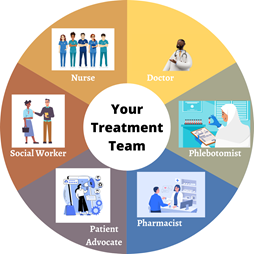
A doctor. Your physical wellbeing is extremely important. Preserving your immune system and avoiding opportunistic infections are key to a long and healthy life with HIV. Your doctor will assist you in managing this. At your visits, the doctor reviews your status, and gives you recommendations. She/he/they may also revise your treatment plan as your body regains more control over your immune system. The doctor also helps you to manage how various non-HIV medications will interact with Antiretroviral Therapy (ART), and can answer any questions or concerns you may have.
A pharmacist. A doctor’s job could never be complete without the support of a reliable pharmacist. At treatment sites, your pharmacist provides you with medication after you visit the doctor. They also provide clear guidance about how to take your medication. Just like your doctor, your pharmacist can answer your questions and concerns about the drugs and possible side effects. It is important to tell your doctor and pharmacist about all of the medicines and supplements that you are currently taking to be healthy. This includes natural therapies, prescription drugs and over the counter drugs.
In Trinidad and Tobago, some persons are often tempted to blend other forms of therapy, such as natural therapy (bush/herbal medicine), with medication. Please do not engage in this without advice from your medical team. Acting without their advice can result in harmful consequences.
A nurse. You also have the support of a nurse! The nurse at the clinic or treatment site will counsel you on your treatment regime and also act as the contact that checks your medication. The nurse can also provide answers on your treatment routine and support you on this journey. If you would like the nurse, doctor or pharmacist to speak to a trusted loved one about what is required for your medical care, they can assist with this as well.
A phlebotomist. You may be thinking :” What is a phlebotomist and why are they needed?” This is the person who takes a blood sample from you to check the levels of HIV in your blood or check for other signs of illness in your blood. In our sections above, we mentioned that the doctor needs to monitor you. This cannot be done without blood samples from the phlebotomist. The doctor can then see how well the treatment is working and the additional steps that are required.
A social worker. You may find it helpful to speak to someone that you can trust about the emotional and social effects of your diagnosis and the way forward. Social workers are there for this. A social worker will speak with you about your treatment plan, emotional wellbeing, and the support that you are receiving from family and friends. Additionally, a social worker can also refer you to organizations to receive financial support, housing or additional therapeutic support. Social workers in Trinidad and Tobago are trained to honour the following principles: confidentiality, non-judgmental attitude and acceptance. As such, you will be heard and given the ability to share in a safe space. If you would like to learn more about social work in Trinidad and Tobago, please feel free to check out the Trinidad and Tobago Association of Social Workers.
Patient / Peer Advocate Communicating with the treatment sites can be a challenge at times. You may feel afraid or they may not understand what you mean. You need an advocate! An advocate can assist to explain HIV-related information to you in better detail, or identify with your point of view and ensure you are understood. Luckily, at the treatment sites, you can have access to patient advocates. They may also be known by other terms, such as peer navigator or treatment supporter. They are all there to help you better understand your diagnosis and assist you on your treatment and care journey. A patient advocate is a person who helps PLHIV communicate with their healthcare providers so they get the information they need to make decisions about their care. If you would like to learn more about what patient advocates do, you can check out the following videos from Eswick Padmore, Founder of Friends for Life and Cyrus Sylvester, Vice Chairman of Patient Advocate Mission.
Some sites also offer peer advocates. These individuals are similar to Patient Advocates, but they are usually other PLHIV (People Living with HIV) that can relate to your current journey and support you in what you are feeling and saying. They are all there to support you.
Administrative Staff. We have listed so many groups. Sometimes, this can get confusing. You should not worry. The administrative staff at these sites help to guide you through the process of seeing each of these members of your team as smoothly as possible. They also do tasks such as schedule your appointments and follow up on your support at home and from your team.
Where Can We Find These Sites?
You are in good hands! There are various treatment sites in Trinidad and Tobago. Let’s take a look at the map below to see where they are located.
If you are not already going to a treatment site and wish to access any of them, their contact information is listed below.
| TREATMENT SITE | CONTACT INFORMATION |
| Medical Research Foundation of Trinidad and Tobago (MRFTT) | ○ 7 Queens Park East, Port of Spain
○ Ph: (868) 623-5834 | Ph: (868) 625-8512
○ Ph: (868) 627-9923 | Fax: (868) 625-2327 |
| San Fernando General Hospital Ward Two (2) (SFGH) | ○ Gomez Street, San Fernando
○ Ph: (868) 225-4325, extension 3249 or 3258 |
| Sangre Grande Hospital (SGH) | ○ Ojoe Road Sangre Grande
○ Ph: (868) 668-2509/7491 |
| Eric Williams Medical Sciences Complex (EWMSC) | ○ Uriah Butler Highway, Champ Fleurs
○ Ph: (868) 225-4673 ext 4111 or 4149 |
| Tobago Health Promotion Clinic (THPC) | ○ Fort King George, Admin Building, Scarborough, Trinidad and Tobago
○ Ph: (868) 635-1206 |
| Eric Williams Medical Sciences Complex (Pediatric Clinic) | ○ Uriah Butler Highway, Champ Fleurs
○ Ph: (868) 225-4673 ext. 2488 |
| Scarborough Regional Hospital (SRH) Pediatric Clinic | ○ Fort King George, Scarborough
○ Ph: (868) 635-2366 | (868) 635-0118 | (868) 660-7033 |
| Cyril Ross Nursery | ○ #7 El Dorado Road, Tunapuna
○ (868) 477 7371 (Manager’s number) |
For more information on where you can get Tested for HIV visit: https://health.gov.tt/services/hiv-counselling-and-testing-sites
To speak with someone on the National HIV Helpline call 800-4HIV or 800-4448. (This is a toll-free number)
You are not alone. #youarenotalonett
You may feel very vulnerable when you are newly diagnosed. However please remember that wherever you are getting HIV care, you have rights as a patient. To learn more about these rights, click here.
Sometimes, in order to reduce the feelings of vulnerability mentioned above, you may want to share with others. If you would like to learn more about how to talk to your friends and family about your HIV diagnosis, visit the disclosure page.